
Dentistry
Diagnostics and panoramic dental X-rays
3D imaging, X-rays and panoramic radiographs at Sana Dente Gdańsk Jelitkowo
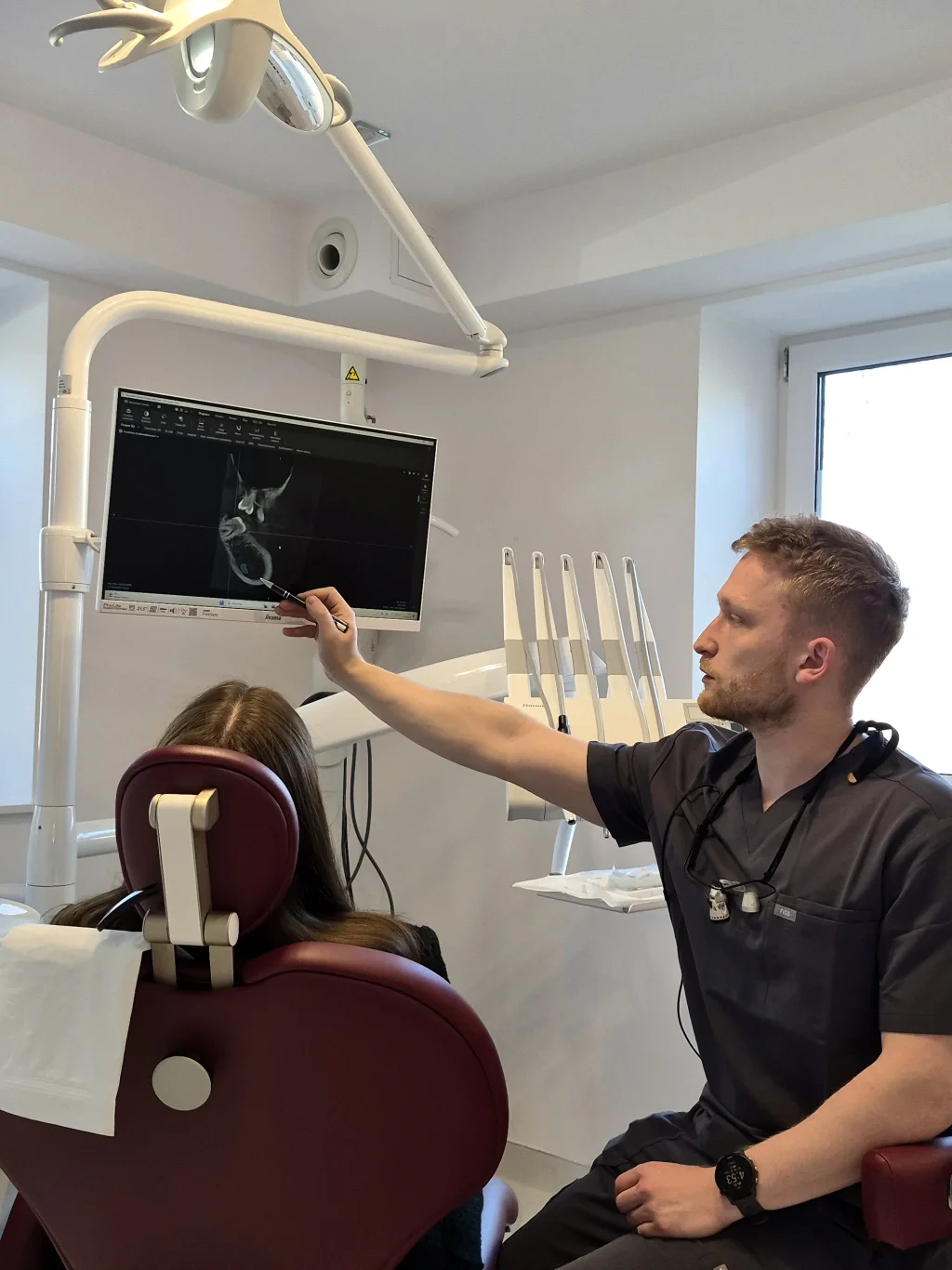
Dental X-rays and panoramic radiographs in Gdańsk Jelitkowo - fast and safe diagnostics
Dental X-rays and panoramic radiographs are among the most frequently performed examinations in dentistry. They allow us to assess the overall condition of the teeth, detect tooth decay and inflammation, and evaluate the position of the teeth, including the so-called wisdom teeth. At Sana Dente in Gdańsk Jelitkowo we take X-rays on site, which significantly shortens the diagnostic process and allows the dentist to quickly propose suitable treatment.
For more complex cases we also offer CBCT 3D computed tomography. This examination provides an exceptionally precise image of the bone structures and tooth roots, which makes microscope root canal treatment in Gdańsk and implant treatment even safer and more predictable.
Panoramic dental X-ray in Gdańsk as the foundation of treatment planning
A panoramic dental X-ray in Gdańsk makes it possible to assess the entire dentition, the bones of the upper and lower jaw and the anatomical structures within them. A single image shows both erupted and impacted teeth, as well as the maxillary sinuses and the temporomandibular joints. Such a broad range of information is an important stage of diagnostics before starting conservative, surgical or orthodontic treatment.
This examination also reveals changes that are not visible during a standard oral examination. A panoramic dental X-ray in Gdańsk makes it possible to detect areas of inflammation at the root tips, cysts or the incorrect position of wisdom teeth. Early recognition of such irregularities makes it easier to plan further steps and discuss the next stages of treatment with the patient.
Dental X-rays in Gdańsk Jelitkowo in precise focused diagnostics
We use dental X-rays in Gdańsk Jelitkowo in situations where a detailed assessment of a single tooth or a selected part of the arch is needed. A periapical X-ray allows us to analyse the length and course of the roots, the seal of the fillings and the condition of the periapical tissues. This type of diagnostics is particularly important in monitoring endodontic treatment. In root canal therapy, dental X-rays are an important part of monitoring the course of treatment. The radiographic image makes it possible to assess the shaping of the canals and their filling with material.
Imaging diagnostics and patient safety
When performing radiographic examinations we use the lowest possible radiation doses appropriate to the diagnostic purpose. Modern digital equipment provides a clear image with limited exposure. We perform every panoramic dental X-ray in Gdańsk or periapical X-ray only when there are medical indications for it.
The digital form of the image allows immediate access to the result on the monitor. The dentist can magnify a selected section, adjust the contrast and analyse anatomical details more precisely. This way of working streamlines the diagnostic process and allows the proposed treatment plan to be discussed with the patient more quickly.
How does interpreting the image affect the effectiveness of treatment?
Simply performing the radiographic examination is only the first stage. What matters most is the correct interpretation of the image, taking into account both the current condition of the tooth and its treatment history. Analysing the image makes it possible to determine the extent of inflammatory changes, assess bone density or detect microcracks not visible during clinical examination.
Based on the X-ray, the dentist plans the next therapeutic steps, choosing a method appropriate to the diagnosis. In some cases additional projections or a follow-up dental X-ray in Gdańsk Jelitkowo during treatment are necessary. This sequence of actions supports precise monitoring of progress and adjustment of the plan if needed.
When is a follow-up X-ray worthwhile?
We recommend a follow-up radiographic examination after selected stages of treatment, for example after root canal therapy or surgical procedures. A panoramic dental X-ray is also performed before starting implant or prosthetic treatment, to assess the bone conditions and the overall state of the dentition.
Regular radiographic check-ups, carried out according to indications, make it possible to detect changes that develop without symptoms at an early stage. This means action can be taken before the problem causes clear pain. Dental X-rays in Gdańsk Jelitkowo are therefore an important part of comprehensive diagnostics and treatment planning at our clinic.
Book a visit at Sana Dente
FAQ
Frequently asked questions
Do I need a referral for a panoramic dental X-ray in Gdańsk?
For examinations carried out as part of planned treatment at our clinic, a referral is not required - the decision to take an X-ray is made by the dentist after examining the mouth. If a patient comes solely for a diagnostic examination, the scope and type of X-ray are determined during the consultation.
What is the difference between a panoramic X-ray and a periapical dental X-ray in Gdańsk Jelitkowo?
A panoramic X-ray covers the entire dentition, the bones of the upper and lower jaw and neighbouring structures, which is why it is used in planning general, surgical or orthodontic treatment. A periapical X-ray focuses on a single tooth or a small area and is used for detailed assessment of the roots, fillings or periapical changes.
Are X-rays safe for children?
We perform radiographic examinations only when there are medical indications for it. The digital equipment we use makes it possible to limit the radiation dose to the necessary minimum. In the case of children, we always assess whether the X-ray is justified and choose the appropriate type of examination.
How long does a CBCT scan in Gdańsk Jelitkowo take?
The examination itself is short and requires no special preparation. The patient remains still for between ten and several dozen seconds, and the resulting image is available in the digital system almost immediately. The result is discussed during the visit.
Do follow-up dental X-rays need to be done regularly?
Follow-up examinations are carried out according to the dentist's indications, for example after completing root canal treatment or surgical procedures. They are not performed routinely without medical justification. The frequency depends on the condition of the mouth and the type of treatment being carried out.
Book your visit today
Mon - Fri: 9:00 - 20:00 · ul. Kapliczna 23/1, Gdańsk Jelitkowo

